Ask the Pediatrician: Dealing with warts
Published in Health & Fitness
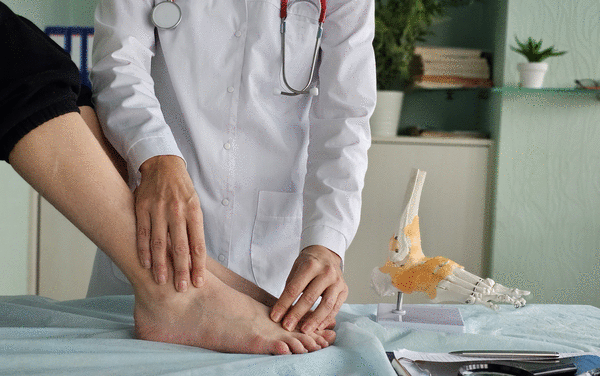
Warts are small, firm bumps on the skin caused by viruses from the human papillomavirus (HPV) family. Warts are common among school-aged children but can affect people of any age.
The good news is, many kinds of warts often go away on their own without treatment. But they can become painful if they are bumped, and some children are embarrassed by them. Your pediatrician can give you advice on treatment, such as applying an over-the-counter medicine containing salicylic acid to the warts.
There are a variety of warts that a child can come into contact with and they are contracted through different methods. Human papillomaviruses are spread by close contact through direct touch or sharing objects. The virus often gets into the body through breaks in the skin.
Common skin warts are bumps with a rough surface and a yellow, tan, black, brown or gray color. They can appear anywhere on the body. However, they are most often found on the hands, including near or under the fingernails, toes, face and around the knees.
When warts are on the bottom of the feet, doctors call them plantar warts. Plantar wars are often flat and painful. Your child may say it feels like they are walking on a pebble. The warts may have tiny red or black dots on them, which are actually tiny, swollen or dead blood vessels. Warts on the bottom of the feet may happen from walking barefoot in locker rooms or around pools.
Warts on the genitals, also called condyloma, are usually spread sexually during genital, oral and anal sex with a partner who is infected. However, skin warts can also be spread to genital areas from warts on the hands or by caregivers who have warts on their hands.
Genital warts that are spread sexually are a risk for certain types of cancer and require long-term follow-up monitoring. These situations should be discussed with your health care provider.
Your doctor may refer you to a dermatologist if your child has multiple warts in many places, a wart on the face or genital area, reoccurring warts, or large, deep, or painful plantar warts. Warts can be treated at home with over-the-counter topical products such as salicylic acid solutions or pads, imiquimod cream, or 5-fluorouracil cream. Duct tape can also be used to remove some warts and can be used alone or alongside salicylic acid.
In-office procedures are also an option, especially for more troublesome warts. These include freezing treatments with a liquid nitrogen-based solution, surgical scraping or cauterization, laser treatments and local injection of certain medications.
Many warts last for months or years and then go away on their own. Warts often will go away with the treatments above, but sometimes a treated wart will come back. If a wart comes back, simply treat it again the way you did the first time, or as directed by your pediatrician.
Some wart treatments may leave a mark or scar. Patients with darker skin may be more likely to have color changes to the skin where a wart was treated. This discoloration will go away with time, but speak to your provider about the risks and benefits of each treatment.
Washing hands after being in public places and wearing shoes when outdoors and in public places will make it less likely to get a wart. Everyone in the family should also use their own towel.
To limit warts from spreading, it is best to avoid touching the wart to other parts of the body or picking the warts.
HPV vaccination prevents genital warts and might also help to prevent common warts. The HPV vaccine is recommended for children 11 years old and older, but it can be administered as early as 9 years old.
Let your pediatrician know if your child develops a wart on her face or genitals. If warts persist or spread or if they are painful, ask your pediatrician for medical advice.
____
Carolena Steinberg, MD, is a transitional year resident in the University of Miami Health System who will attend dermatology residency at UC San Diego. Her strong interest in pediatric dermatology was fostered as a PeDRA Fellow and Emerging Investigator at Stanford University.
Diana H. Lee, MD, PhD, FAAP, a member of the American Academy of Pediatrics Section on Dermatology, is a board-certified pediatric dermatologist and is Associate Professor of Dermatology and Pediatrics at Weill Cornell Medicine.
©2026 Tribune Content Agency, LLC.







Comments