60-day wiretap, 200 bank accounts and 100+ hours of recordings: What feds say they have in case against Va. state lawmaker Louise Lucas
Published in News & Features
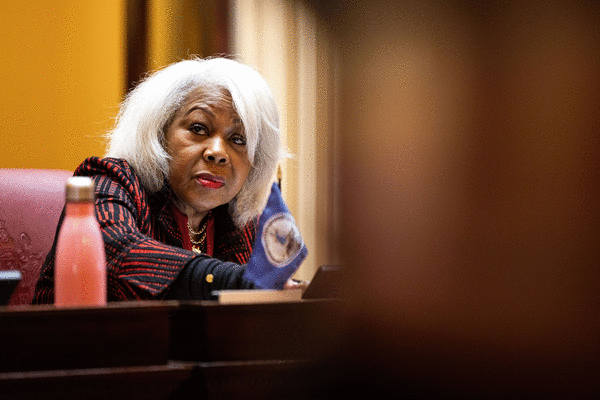
NORFOLK, Va. — Federal prosecutors have divulged what kinds of evidence they are relying on to bring racketeering conspiracy and marijuana distribution charges against one of the state’s most powerful elected officials, as well as members of her family and former associates.
They made the revelations in a Nov. 6 court filing, asking a judge to designate the case “complex,” which would allow a trial date to be scheduled beyond the 70-day deadline from the date of indictment set by federal law.
Under the Sixth Amendment, defendants have a constitutional right to a “speedy” trial by jury. The 70-day limit is meant to ensure that right and protect criminal defendants – presumed to be innocent – from having their cases drag on for too long.
But the deadline can be pushed back by a judge’s order for cases designated as complex, often because of the number of defendants and the volume of the evidence.
To make their case, federal agents and prosecutors, according to the filing, surveilled state Sen. Louise Lucas, as well as six others charged in the indictment and various business addresses associated with them, for “hundreds of hours.”
They recorded video and audio from multiple controlled purchases of marijuana at three cannabis stores connected to Lucas and her co-defendants, according to the filing.
Federal agents seized ten boxes of documents, as well as “numerous” cellphones and computers from raids at three cannabis stores owned by Lucas and two other co-defendants conducted in May. All of the documents and electronic data, according to the filing, must be digitized for use in the case.
The financial and business records of approximately 200 bank accounts associated with the case’s defendants are also a part of the investigation, the filing says, and agents amassed dozens of hours of recordings across 60 days from two wiretaps on the lawmaker’s cellphone.
Prosecutors wrote they need time to debrief the case’s “witnesses involved in (a racketeering) conspiracy,” to distribute marijuana, launder money, commit honest services and wire fraud, which they believe began in 2019 and continued through 2026.
The cases, federal prosecutors note, are further complicated by “the application and intricacies of Virginia’s marijuana laws and regulations” – which they would need to understand to prove that Lucas used her political influence to steer the emergent licenses to people she had financial ties to.
The defendants’ attorneys, according to the filing, agreed to the designation, which would also give them more time to review the case’s lengthy material.
U.S. District Judge Jamar Walker, in an order filed Monday, granted prosecutors’ request to designate the case against Lucas and six others as complex, allowing them to set a trial date beyond the 70-day deadline.
“Specifically, the number of defendants, volume of discovery, and the nature of the charges in this case,” Walker wrote, “make it so complex … that it is unreasonable to expect adequate preparation for pretrial proceedings or for the trial itself within 70 days.”
The alleged conspiracy, according to a federal indictment filed last month, centered on Lucas and six associates, as early as 2022, illegally purchasing and selling copious amounts of marijuana at the lawmaker’s Portsmouth cannabis store.
The conduct allegedly coincided with Lucas’ chief co-patroning legislation to create Virginia’s new regulatory market for recreational marijuana sales, a position federal prosecutors believe she attempted to financially benefit from.
Lucas has denied the indictment’s allegations entirely since its filing was announced by FBI Director Kash Patel and U.S. Attorney General Todd Blanche at a Norfolk press conference on Oct. 22.
“I grew up under Jim Crow,” she wrote in an X post. “I’ve seen what happens when people in power try to silence those who stand up to them. I spent my life fighting back and I’m not stopping now.”
Two wiretaps
The Virginian Pilot learned that the FBI wiretapped Lucas’ phone communications in July, when a reporter received a letter stating that her phone conversations with the state lawmaker were included in a court-authorized interception conducted by the FBI from March 6 through April 5.
Several phone conversations quoted in the 45-page October indictment appear to have been captured in the taps – including a March 11 phone call with Lucas’ daughter and two lawmakers in which Lucas suggests that a cannabis dealer she was on the outs with would be disqualified from obtaining a recreational sales license.
The filing also cites a second wiretap in which federal investigators listened to Lucas’ phone conversations from April 14 to May 14, according to a second letter received by a Pilot reporter in August.
Weed buys, bank accounts and shifting pot laws
Law enforcement recorded video and audio from at least ten controlled purchases of marijuana they made between October 2024 and July 2026 at Lucas’ Portsmouth store, as well as two other stores owned by a co-defendant and an unidentified conspirator, the recent filing suggests.
In one of the videos, according to the Oct. 14 indictment, Lucas’ grandson Ryan Eichelberger, while selling them an ounce of marijuana, told an undercover officer at The Cannabis Outlet that more “product” would be arriving on Nov. 3, 2025.
Agents watched the store on that day and saw co-defendant Prince Albert Williams Hudson III, delivering multiple large boxes, according to the indictment.
Hudson is accused of being a primary supplier of weed to Lucas’ store. The indictment cites over $1.52 million across 24 separate transactions in payments the store made to Hudson in 2024-2026.
The payments were a portion of dozens of others cited in the indictment, which the court filing says prosecutors tracked by reviewing the records of approximately 200 bank accounts connected to the co-defendants.
Federal prosecutors wrote that Virginia’s marijuana laws and regulations also complicates their preparation for a trial.
While possession of small amounts of weed was legalized in 2021, the selling of any amount for recreational purposes has remained illegal. A new state law however, sponsored by Lucas and passed in June, will award through a lottery-based system some 350 licenses to sell this summer.
But recreational marijuana use, as well as its manufacture and distribution, remains illegal under federal law.
While a trial and pretrial proceedings are unlikely to commence anytime soon, all seven co-defendants are expected to attend arraignments in Newport News’ federal courthouse on Thursday and early next week, where they will tell a judge whether they intend to initially plead guilty or not guilty to their charges.
Eichelberger, Tameka Johnson and Carlton Upton Jr. will appear in court on Thursday.
The remaining co-defendants – including Lucas and her daughters, Lucas-Burke and Theresa Lucas-Lamb, as well as Hudson – are scheduled to appear in federal court Nov. 16.
—Senior staff reporters Peter Dujardin and Kate Seltzer contributed to this report.
_____
©2026 The Virginian-Pilot. Visit at pilotonline.com. Distributed by Tribune Content Agency, LLC.






Comments