Aldermen blast Chicago Mayor Brandon Johnson's plan to rework gunshot detection test
Published in News & Features
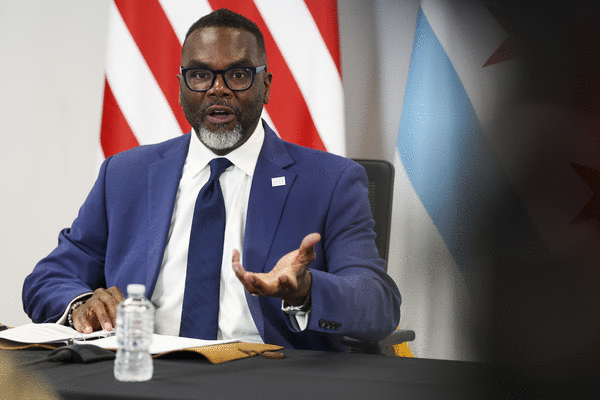
CHICAGO — As aldermen grilled Mayor Brandon Johnson’s top procurement official for abruptly changing the mayor’s vague plan to test gunshot detection technology in Chicago neighborhoods, they were left without a key piece of information.
Before his administration backed off the small-scale pilot program the mayor had been promising would start in early November, it faced legal pressure from SoundThinking, the company behind the controversial ShotSpotter gunshot detection system Johnson decommissioned two years ago.
City Chief Procurement Officer Sharla Roberts announced to aldermen Monday the administration would abandon its imminent trial of an unnamed gunshot detection tool and instead test a variety of such technology.
“We are in the process of reviewing the pathway that we’re going to take, so it will be a pilot. But we’re opening up to a broader base,” she said during a hearing on the 2027 budget.
The news stunned City Council members, who became irate and confused as Roberts shared few details on what will come next.
The procurement leader had refused to attend an Oct. 20 meeting scheduled by aldermen seeking an update on her department’s almost two-year search for a technology to replace ShotSpotter. At that earlier meeting, she surprised aldermen by promising in a letter that a program evaluating one such tool would start within the next two weeks.
Aldermen eager to see gunshot detection tools back in operation viewed her Monday announcement as a concession that she had nothing to show for that pledge.
“You seem to be obstructing,” Ald. Samantha Nugent, 39th, said. “You’re not moving forward on what my colleagues and I have been asking for. We have asked you to come to a committee meeting. You didn’t show up. You sent a letter as a proxy for your presence, saying that we’d have a pilot. You said we’d have it in two weeks. The two week date would have been last Tuesday.”
Roberts told aldermen the change was a response to feedback from aldermen, conversations with police and “extensive inquiries” from companies applying for a long-term gunshot detection contract.
“What does that mean in English?” Johnson ally and Budget Committee chair Ald. Jason Ervin asked after her explanation.
The decision also comes after Chicago voters last week expressed widespread support for gunshot detection technology. Over 72% of voters backed a nonbinding referendum calling for the city to once again use such first responder tools.
During her Monday testimony, Roberts did not directly acknowledge a letter sent by SoundThinking attorneys on Oct. 27. In the letter, attorney Robert Markin told her the city would be required to allow all short-listed vendors seeking the long-term contract — including the company behind ShotSpotter — to participate in any pilot program.
SoundThinking CEO Ralph Clark said Monday night his company was “very happy” to apply for the long-term contract, but added he had little information about the new testing plan.
“We’re in the dark, it sounds like most of the city of Chicago is,” he said. “So we’re hoping to learn more.”
His confusion echoed that of interim Chicago Police Superintendent Fred Waller, who suggested he knew little when asked for details in late October about the original pilot Roberts announced.
“I wish I knew, I wish I knew more,” Waller said at the time.
Johnson spokesperson Allison Novelo said Monday evening four companies have been identified to deploy and test policing technologies across several police districts in a “no-cost” pilot program.
“The pilot programs allow the City to rigorously assess the accuracy, reliability, and effectiveness of technologies in question in addressing public safety needs, while ensuring that residents’ privacy and civil rights are protected before making long-term contractual commitments,” she said.
During the Monday meeting, Roberts similarly defended the updated pilot as a way to dig deeper after initial tests. The city’s “rather long” process of picking winners in procurement often stretches years, she added.
“Before we fully invest in such a type of product, we want to ensure that it is not ineffective,” she said. “As I move forward with any procurement of this size and nature in complexity, we’re going to do more pilots, we’re going to do more testing.”
For his part, Johnson said he supports gunshot technology in an interview with the Tribune last week.
“I’ve said from the very beginning that I support technology that enhances our ability to keep people safe,” he said. “But I also said that we have to have responsible technology, technology that’s effective and technology that’s not invasive.”
The mayor’s efforts to remove ShotSpotter have become a key point of tension between him and the council. He railed against the first responder tool as overly costly, invasive and ineffective, often arguing it misallocated police resources as he shut it down despite a majority of aldermen wanting it to continue.
Johnson, who campaigned on the promise of getting rid of ShotSpotter and routinely derided it as an expensive “walkie-talkie on a stick,” touted the pilot Roberts had announced as a way to vet technology, several days before she announced the plan had been upended.
Pressed on when the pilot would start, he did not say, but pointed to sharp declines in shootings and murders seen across the city in the last two years.
“So clearly, we’re making the right investments to drive violence down. There’s no one in this city that is more focused on keeping people safe than I,” he said.
_____
©2026 Chicago Tribune. Visit chicagotribune.com. Distributed by Tribune Content Agency, LLC.





Comments