Minneapolis Fed reports widespread economic impact from ICE action
Published in News & Features
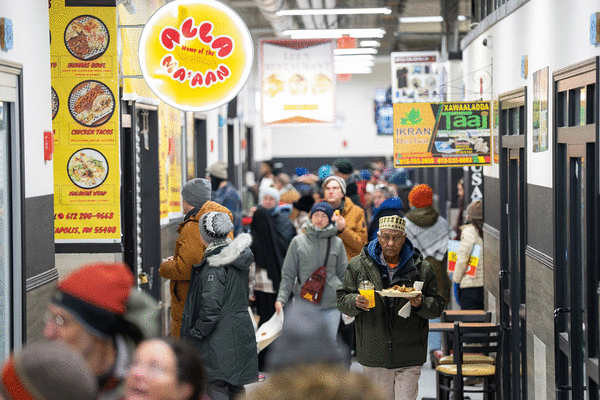
MINNEAPOLIS — A new report from the Federal Reserve Bank of Minneapolis describes the disruption to hiring and spending across a variety of industries during the federal immigration crackdown in Minnesota.
The anonymous anecdotes were part of the national Federal Reserve’s February Beige Book, an account of economic conditions across the country published eight times a year, before each central-bank policy meeting. The newest edition, released Thursday, March 5, pulls from surveys through Feb. 23. Operation Metro Surge started in December and began winding down in mid-February.
In the publication, a Twin Cities landscaping firm said many of its immigrant employees left or stayed home last month, and it could not hire workers to replace them. A workforce development organization offering English classes to new arrivals reported a 43% drop in enrollment.
A mention of the immigration enforcement action appeared in almost every section of the Beige Book from the Fed’s ninth district, which includes Minnesota, Montana and the Dakotas. It’s unusual to see the commentary reflect such a widespread impact from one event, said Erick Garcia Luna, an economist with the Federal Reserve Bank of Minneapolis.
“It seems like it touched, to a certain degree, every sector,” he said.
The heightened presence of federal agents directly affected immigrant communities, with reports of workers staying home out of fear of detainment or deportation. The subsequent wage losses threatened families’ ability to pay for necessities like rent and utilities, the Fed commentary said.
Industries that rely heavily on immigrant labor, such as hospitality and retail, experienced operational challenges. Businesses that women and people of color own faced mounting challenges to stay afloat, with reports of “a significant increase” in requests for loan modifications following “a sharp decline in foot traffic.”
The ripple effects of the enforcement action, however, hit beyond immigrant communities, according to the commentary. Overall consumer spending in the district fell since the Fed’s last report.
“We can’t necessarily say that some of the changes in activity were caused by immigration enforcement activity,” Garcia Luna said. “But rather, there’s obviously some correlation in what businesses reported in terms of how they felt about economic activity in the state of Minnesota and what was happening around us.”
“It was slightly more negative for Minnesota than it was for the rest of the district,” he added.
Safety concerns affected overall customer demand, per the report. Federal agents killed Minneapolis residents Renee Good and Alex Pretti a few weeks apart in January.
“Several contacts reported negative business impacts from the presence of federal agents in Minnesota, because employees, vendors and customers alike ‘were afraid to travel,’” the Beige Book said.
Extreme cold was also a factor. That, plus the immigration crackdown, made for a bad month of business in construction, the commentary said, citing a Twin Cities builder. A recent report from the city of Minneapolis said the number and value of building permits issued in January were the lowest recorded for the month in a decade.
The Beige Book’s national summary struck a more cautiously optimistic tone, reporting an overall increase in economic activity at a slight to moderate pace in seven of the 12 Federal Reserve districts.
_____
©2026 The Minnesota Star Tribune. Visit startribune.com. Distributed by Tribune Content Agency, LLC






Comments