Birutė Galdikas: The last of the ‘angels’ in primatology’s most extraordinary chapter
Published in Science & Technology News
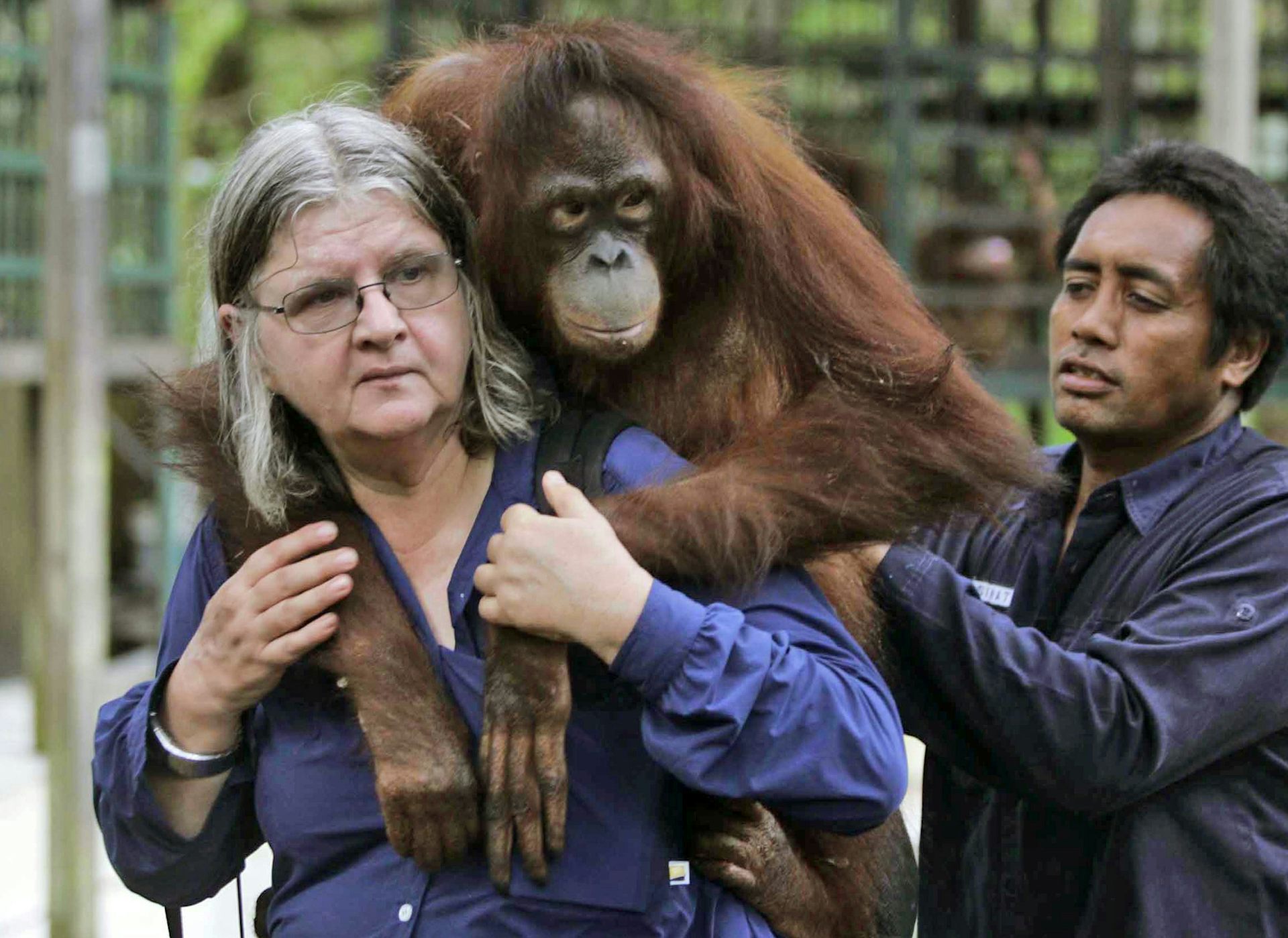
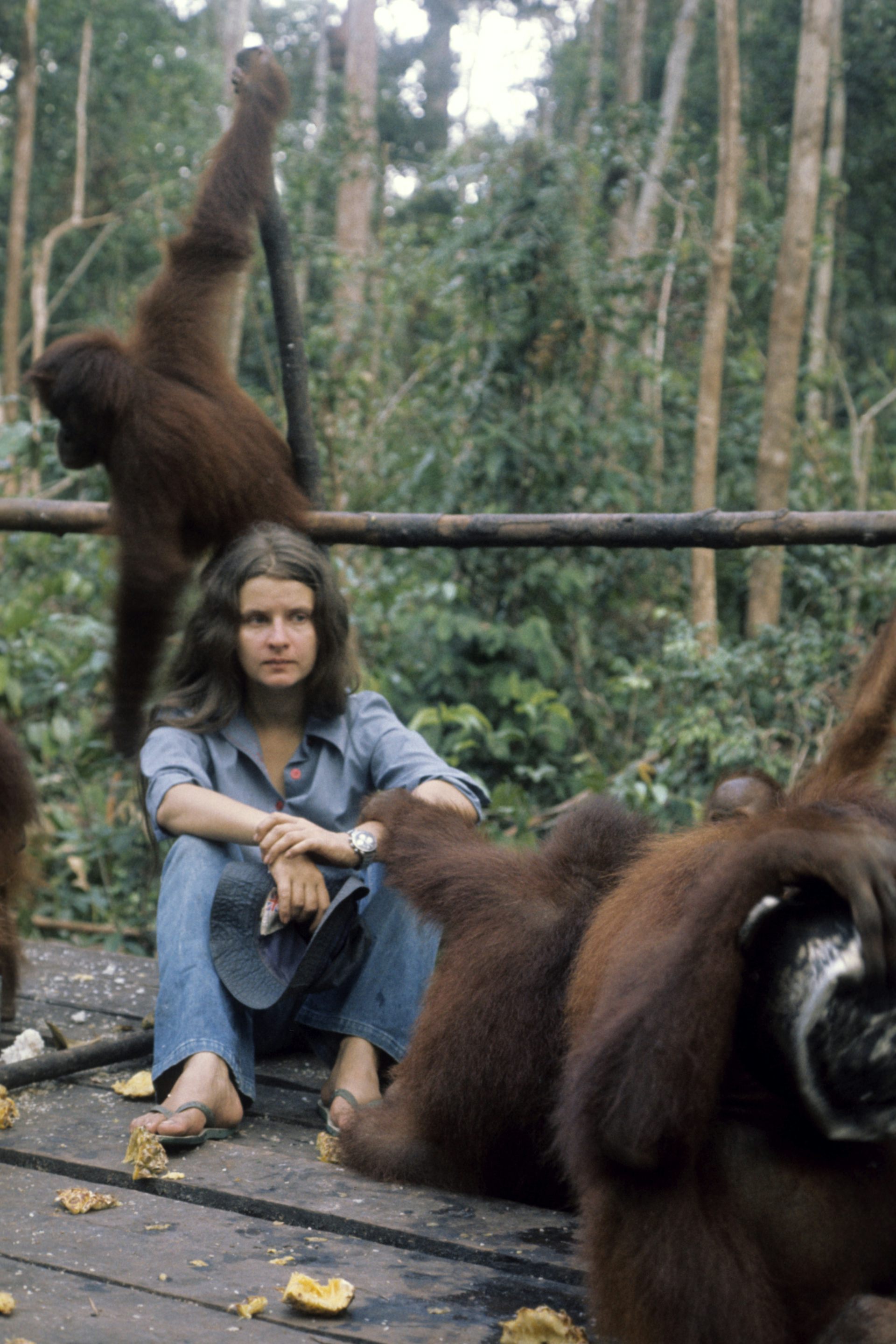
Primatologist Birutė Galdikas died on March 24, 2026, and an era of science that began in the forests of Tanzania, Rwanda and Borneo studying humanity’s closest living relatives more than half a century ago is coming quietly to a close. Her passing marks more than the loss of a scientist – it’s the end of one of the most extraordinary chapters in modern science.
For more than half a century, primatology had three central figures: Jane Goodall, Dian Fossey and Galdikas — often called Leakey’s Angels, after their mentor — who transformed how we understand primates and, in many ways, how we understand ourselves.
They were sent into the field by paleoanthropologist Louis Leakey, who believed that if we understood other primates, we might better understand human evolution and human nature. It was a radical idea at the time, not only scientifically but culturally. Leakey did not send large research teams or established professors. Instead, three young women went into forests, often alone, for years at a time.
What they discovered changed science and the public imagination.
Before the scientists’ work, primates were often described as creatures of instinct, their behavior explained largely through simple drives for food and reproduction. After their work, people began to talk about individuals with personalities, alliances, rivalries, friendships and grief.
Goodall, Fossey and Galdikas showed that chimpanzees make tools and wage political struggles, that gorillas live in complex family groups, and that orangutans raise their young with a patience and investment that rivals that of humans. The line between humans and other primates did not disappear, but it became harder to draw cleanly.
They also changed who could be a scientist.
Three women living for years in remote forests in the 1960s and ‘70s was not normal. By succeeding, they quietly expanded the boundaries of who could lead expeditions, run field sites, publish major research and become the public face of science. Many primatologists of my generation entered a field that these women forced open.
Each of these extraordinary women shaped my life in different ways. I never met Fossey, who died in Rwanda in 1985. But watching “Gorillas in the Mist,” a movie about her work, changed the course of my life and sent me toward primatology instead of law school. Years later, as a young primatologist studying lemurs, I met Goodall at a conference; she later wrote the foreword to my book and became a mentor and friend as I navigated my own path in conservation science. I met Galdikas, a scientist at Canada’s Simon Fraser University, professionally and immediately recognized a kindred spirit – another woman who had devoted her life to the study and protection of humans’ closest animal relatives.
With their deaths – Goodall died in 2025 – it falls to those of us who were inspired by them to continue and evolve their work at a time when it has never been more difficult or more important.
But the field today’s primatologists inherited is not the same one they began.
The first generation of field primatologists went into forests full of animals to discover how primates lived. They were explorers as much as scientists, and their work had the feel of discovery in the classic sense – new behaviors, new social structures, new understandings of intelligence and culture in animals.
Their research helped reshape anthropology, psychology and evolutionary biology. They helped answer one of the oldest questions humans ask about themselves: What makes us different from other species?
By the time my generation began working in the field, many of those questions had already been answered. We knew primates used tools, formed political alliances, reconciled after fights and mourned their dead. We knew they had personalities and social strategies.
The question was no longer whether primates were like us, but whether they would survive us.
This is the quiet shift that defines modern primatology. My generation now goes into forests that are smaller, more fragmented and quieter, and the work is increasingly focused on making sure those animals are still there at all.
I have spent much of my career studying lemurs in Madagascar, where this shift is impossible to ignore. Lemurs are among the most endangered group of mammals on Earth, with more than 90% of species threatened with extinction. In many parts of Madagascar, forests now exist only as isolated fragments surrounded by agriculture and human settlement. Some lemur populations survive in forest patches so small that a single fire or logging operation could eliminate them entirely.
These primates that captured the world’s attention are also the species most like us. They have long childhoods, complex societies, intelligence, and emotional lives that feel familiar to us. Their similarity is what made people care. And that caring, in many cases, is what has kept them from disappearing entirely.
The great achievement of Leakey’s Angels was not only what they discovered, but that they made the world care about primates.
Before the three scientists’ work, chimpanzees, gorillas and orangutans were largely abstract animals to most people – zoo exhibits, textbook illustrations, evolutionary symbols. After their work, these creatures became individuals with names, families, histories and personalities. Each of the women’s work was celebrated in films and books, including the Morgan Freeman-narrated documentary “Born to Be Wild 3D” that followed Galdikas’ orangutan rescues.
Conservation begins with caring, and caring begins with stories. They gave the world those stories.
But caring is no longer enough. We are now in an era where the most important breakthroughs in primatology may not be new discoveries about behavior, but new ways to protect habitats, connect fragmented forests, preserve genetic diversity and help humans and primates survive on the same increasingly crowded landscapes.
The work has shifted from observation to intervention, from discovery to responsibility.
Every generation of scientists inherits a different world. The generation of Jane Goodall, Dian Fossey and Birutė Galdikas inherited a world full of primates we did not yet understand. My generation has inherited a world where we understand primates very well, but are in danger of losing them anyway.
The forests are quieter now than when these three young women went into them more than half a century ago. The responsibility, however, has only grown louder.
The central question of primatology is no longer what makes us human. It is whether a species intelligent enough to understand extinction will choose to prevent it in our closest living relatives.
This article is republished from The Conversation, a nonprofit, independent news organization bringing you facts and trustworthy analysis to help you make sense of our complex world. It was written by: Mireya Mayor, Florida International University
Read more:
Jane Goodall, the gentle disrupter whose research on chimpanzees redefined what it meant to be human
Examining how primates make vowel sounds pushes timeline for speech evolution back by 27 million years
Studying chimpanzee calls for clues about the origins of human language
Mireya Mayor does not work for, consult, own shares in or receive funding from any company or organization that would benefit from this article, and has disclosed no relevant affiliations beyond their academic appointment.







Comments