Afroman testifies that unflattering videos of sheriff's deputies were 'their fault' after imperfect raid
Published in Entertainment News
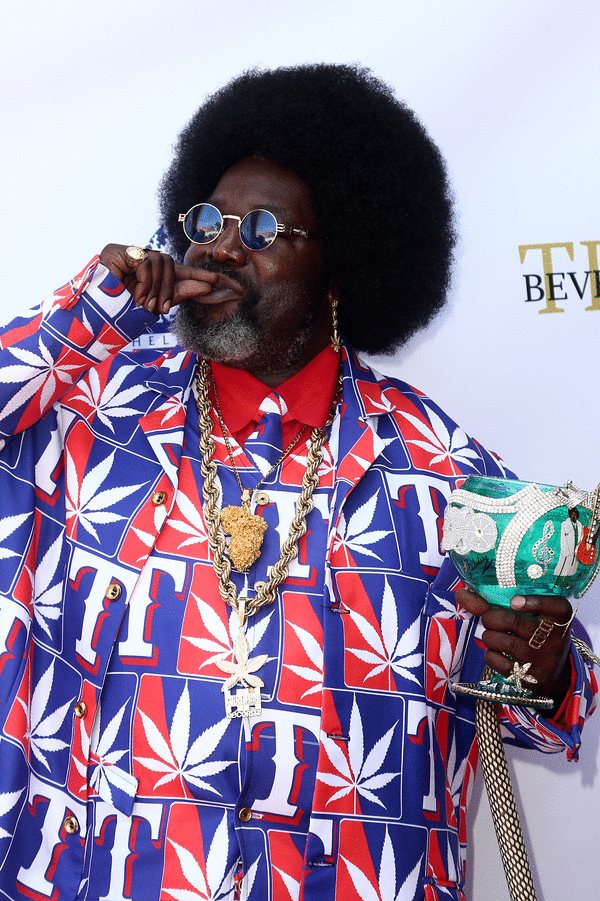
LOS ANGELES — Afroman testified Tuesday in a civil lawsuit brought by seven members of an Ohio sheriff’s office who allege he used their likenesses without permission in music videos and on merchandise and spread lies about them after they raided his home in August 2022.
The fault, the “Because I Got High” rapper maintained, was not his. On Wednesday, the jury was deliberating the case.
The 51-year-old, whose real name is Joseph Edgar Foreman, said on the stand Tuesday that he was in the right, according to local station WCPO Channel 9 in Cincinnati.
“The whole raid was a mistake. All of this is their fault,” Foreman testified, taking the stand wearing sunglasses with American flag lenses and a red, white and blue suit and matching tie made of fabric recalling the American flag. “If they hadn’t wrongly raided my house, there would be no lawsuit, I would not know their names, they wouldn’t be on my home surveillance system, and there would be no songs, nothing.”
Officers were acting in 2022 on a warrant showing probable cause that drugs and drug paraphernalia would be found on the property. The warrant also alleged that trafficking and kidnapping had happened there. No evidence of a crime was found, and no charges were filed. Foreman wasn’t home during the raid but was able to see at least part of it via a video recorded by his ex-wife and footage captured on his home security system before law enforcement turned off those cameras.
It was that footage that was used in the various videos the rapper subsequently posted, including a music video for the song “Lemon Pound Cake,” which he wrote about the raid.
Officers tore down his door, he said, and damaged his house, taking money, vape pens and a small amount of marijuana. There was a discrepancy about the amount of money taken and returned to the rapper, which seemed to be a point of contention linked to whether he was misrepresenting what the deputies did during the raid.
“After they left, I had the right to kick the can and to do what I had to do to repair the damage they brought to my house. Yes, I did,” Foreman said. “I have freedom of speech. I’m a rapper. I entertain.”
His testimony came on the second day of the trial, after the deputies took the stand the first day and testified that though the raid wasn’t perfect, Foreman had been spreading lies about them for years since it occurred. Deputy Lisa Phillips, whose gender identity had been called into question in Foreman’s videos and social media posts, cried on the stand as some of those videos were played for the court.
Footage with a song called “Licc’em Low Lisa” showed Foreman saying he thought he would “crack some musical jokes” in the wake of the raid, then going to comfort a crying actor who resembled Phillips. “I didn’t know they hurt you that bad. ... I was just having fun with a bad situation.” The same video showed the actor engaging in sexual activity with another woman.
In their lawsuit, WCPO said, the deputies said the posts and videos caused them “humiliation, ridicule, mental distress, embarrassment and loss of reputation” and made it difficult to do their law enforcement work.
In an amicus brief, however, the ACLU argued that the deputies’ lawsuit was a “classic entry into the SLAPP suit genre,” referring to a type of lawsuit that seeks to discourage criticism of public officials.
©2026 Los Angeles Times. Visit at latimes.com. Distributed by Tribune Content Agency, LLC.










Comments