Latino neighborhoods see sharpest drop in Chicago Public Schools enrollment, report shows
Published in News & Features
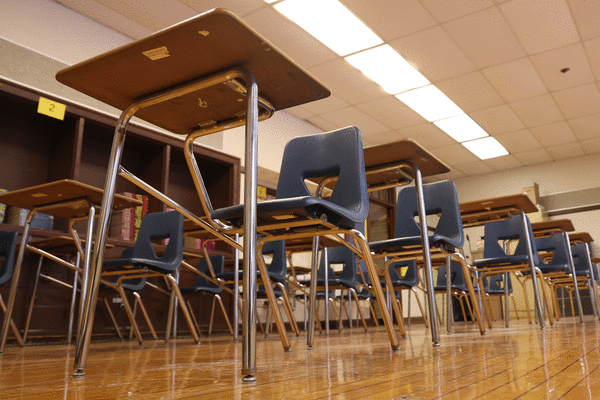
CHICAGO — In another year of declining student enrollment for Chicago Public Schools, Latino neighborhoods throughout the city are seeing the steepest drop, according to a new report.
Neighborhoods on the city’s northwest and southwest sides have been hit particularly hard by declining enrollment, the report said, citing Little Village, West Town, Brighton Park, Albany Park and Belmont Cragin as the five community areas with the largest enrollment declines this fall. Latino students comprise the majority — 46% — of CPS’s student body.
The drop in Latino enrollment accounts for more than two-thirds of the district’s overall decline this year, according to the report, produced by education nonprofit Kids First Chicago. Specifically, Latino enrollment fell by about 7,800 students, or 5.3%.
At the community level, Latino students also make up the bulk of enrollment at schools in certain neighborhoods. The report said that Latino students make up around 89% of enrollment in Little Village, Brighton Park and Belmont Cragin. The district’s most recent demographic data reflects similar figures, with most schools in the neighborhoods reporting over 80% of their student population as Latino.
In particular, Little Village lost around 650 students, an 8% decline from 2025-26, while Woodlawn is down 320 students, or around 10%, from 2025-26. Beyond that, Avondale, Gage Park and McKinley Park — all predominantly Latino neighborhoods — also saw significant enrollment drops, ranging from 35% to 40%, as the Tribune previously reported.
The decline in Latino enrollment mirrors an overall drop across the district, a trend CPS has been fighting to reverse for years. Overall enrollment declined about 3.7% from last year, down more than 11,000 students, according to district data. The Kids First report said that enrollment dropped in 67 of the city’s 77 community areas for the fall, with 10 of those areas accounting “for roughly 40% of the districtwide decline.”
A drop in Black student enrollment in CPS has also contributed to the district’s decline, the report said, as Black enrollment fell by about 3,470, or 3%.
“These enrollment counts tell us the size of the decline, but not what is driving it,” the report states. “Without student-level mobility data, we cannot determine how much reflects families leaving CPS, moving out of Chicago, or choosing other school options.”
Kids First Chicago Chief of Policy Hal Woods acknowledged in a media briefing Friday that much of the district’s enrollment declines and trends are structural and “outside of CPS’s control.” Public school enrollment has dropped across the U.S. in tandem with declining birth rates.
“We actually have about 20,000 fewer babies being born in the City of Chicago in the last 20 years,” Woods said. “That just means that there’s a lot fewer school-age kids in the City of Chicago than there used to be.”
Beyond that, the report said declines in specific demographics aren’t limited to this past year.
Latino enrollment has dropped by 22% over the last decade, falling from around 177,000 students enrolled in 2016-17 to about 139,000 this fall, according to the report.
Similarly, Black student enrollment has also dipped over the past ten years, dropping by 27% from around 144,000 students enrolled in 2016-17 to around 105,000 this fall.
Woods added that it’s hard to know for certain the full effect of other factors — such as 2025’s immigration enforcement actions across the city and living costs — on enrollment.
“You see certain community areas that are seeing significantly more enrollment declines,” Woods said. “Gentrification, just the cost of living in some of those communities, the cost of housing, people having to spend 40, 50, 60% of their income on rent or mortgage — that’s pushing people out as well.”
Enrollment declines must be considered alongside the recent challenges the Latino community faced and their lingering effects, including Operation Midway Blitz and the cost of living, as Woods highlighted, according to recently re-elected school board member Yesenia Lopez, District 7B.
“When we look at the communities that were impacted by Midway Blitz … it’s no coincidence that many of those communities overlap with where we saw the loss of students,” Lopez said. “… It all ties up that the current culture of fear in immigrant communities has impacted students and families.”
Beyond that, the cost of living and limiting of opportunities could make the American Dream feel less attainable for many immigrants, Lopez noted. That feeling, meshed with the fear students have felt in the last year, could be contributing to not only a loss in enrollment, but also a dip in attendance.
In Lopez’s eyes, the district has a responsibility to check in with these families and communities showing enrollment drops.
“How do we, as a district, look beyond the numbers?” Lopez said. “The data is telling us a part of what’s happening, but how does the district go into the communities and look farther into what is actually causing … a number of families to keep departing at such high rates?”
____
©2026 Chicago Tribune. Visit at chicagotribune.com. Distributed by Tribune Content Agency, LLC.






Comments