US loses measles elimination status after first eradicating the disease 26 years ago
Published in News & Features
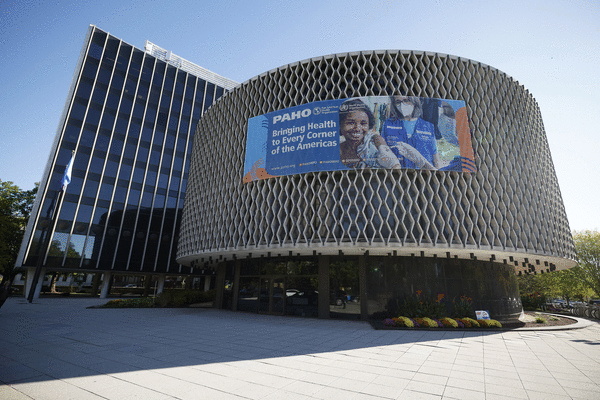
In 2000, the U.S. became the first country in the world to officially eliminate measles — a public health triumph that took decades of work and set a new standard for disease prevention efforts worldwide.
Maintaining that status turned out to be a harder challenge than the nation was willing to take on.
On Tuesday, the Pan American Health Organization, an offshoot of the World Health Organization, confirmed that measles is once again endemic in the United States.
Elimination means that a disease has become rare enough, and immunity to it widespread enough, that local transmission dwindles quickly if a case or two emerges.
That is no longer the case in the country.
The Pan American Health Organization, or PAHO, confirmed that the same virus strain was able to circulate uninterrupted in the U.S. for at least 12 months since it was first recorded in west Texas on Jan. 20, 2025. It’s a sign that there are no longer enough vaccinated people to prevent transmission of a disease that once killed hundreds of people every year and hospitalized thousands more.
The organization stripped Bolivia and Mexico of elimination status at the same time. Canada lost its elimination status last year.
There were fewer than 4,500 confirmed measles cases in the U.S. during the quarter-century of elimination, according to the U.S. Centers for Disease Control. There were more than 2,200 cases in 2025, the highest annual case count since the early 1990s, and there have been more than 5,400 cases so far this year.
Ten cases this year were fatal, according to the CDC. There were three measles-related deaths in the U.S. in 2025, and three from 2000 to 2024.
The loss of elimination status was “predictable, given the ongoing measles outbreaks over the past two years, but also profoundly sad,” said Dr. Adam Ratner, a member of the American Academy of Pediatrics Committee on Infectious Diseases and the author of “Booster Shots: The Urgent Lessons of Measles and the Uncertain Future of Children’s Health.”
“It took a tremendous amount of work to get from having a measles vaccine available to nationwide elimination — decades of work, one child at a time,” he said. “Because measles is so contagious, undoing that progress is much easier than making it in the first place, and it will be a long road to regaining our elimination status.”
PAHO made its decision based on transmission evidence between January 2025 and January 2026, when measles began to circulate in west Texas. That data does not include the 1,500 cases and seven deaths from this year’s outbreak in Pennsylvania, the largest U.S. measles outbreak in the last 35 years.
Even as cases have cropped up in surrounding states, transmission in Southern California has remained low.
There have been seven measles cases in Los Angeles County this year, all of which were linked to travel, the county Department of Public Health said in a statement.
The agency credited the county’s high rates of measles, mumps and rubella vaccination with preventing further spread.
A full 97.9% of L.A. County children entering kindergarten in the 2025-26 school year received the MMR vaccine, above the 95% rate necessary for herd immunity, according to the Department of Public Health.
Nationwide, the rate was 92.4%, with a record-high 4.2% of incoming kindergarten families requesting vaccine exemptions.
Shortly after PAHO’s announcement Tuesday, Health and Human Services Secretary Robert F. Kennedy Jr. made a social media post blaming the COVID-19 pandemic for disrupting vaccination access.
“We will stop measles outbreaks, protect American families, and work to regain U.S. measles elimination status. I continue to recommend MMR vaccination as the most effective way to prevent measles,” Kennedy wrote on X.
Yet several public health groups blamed the resurgence on Kennedy and the Trump administration’s vaccine messaging and policy.
In 2025, Kennedy dismissed the members of a key vaccine advisory committee to the CDC and replaced them with handpicked appointees, several of whom had been openly critical of vaccination.
The CDC altered its website on vaccines and autism to include inaccurate statements linking immunizations to the neurodevelopmental disorder.
This year the agency abruptly slashed the number of diseases it recommends children be vaccinated against from 17 to 11. In August, as Kennedy looked on, President Trump signed an executive order demanding that the MMR vaccine be split up into multiple shots, a move that would require both overhauling the entire U.S. vaccination production system and forcing families to make more doctor visits in order to get the same immunity the combination vaccine confers.
“HHS under Kennedy has become an epidemiological crime scene,” said epidemiologist Elizabeth Jacobs, a University of Arizona professor emerita with the nonprofit advocacy group Defend Public Health. “Kennedy’s reign of error must end.”
Measles is the most infectious vaccine-preventable disease. Before a vaccine was introduced in 1963, nearly all U.S. children contracted it before their 15th birthday, resulting in up to 4 million cases each year. An estimated 48,000 people were hospitalized annually with serious and sometimes fatal complications.
Those risks have not gone away. In September 2025, a school-age L.A. county child who contracted measles before they were old enough to be vaccinated died from subacute sclerosing panencephalitis, a fatal progressive brain disorder that strikes roughly 1 in 10,000 people infected with measles in the United States.
The disease begins with seizures, cognitive decline and involuntary muscle spasms, and progresses to dementia, coma and death.
The disorder typically develops two to 10 years after initial infection, even when the patient fully recovers, as this child did. Doctors believe the risk is as high as 1 in every 600 children who contract measles as a baby.
Soon after the announcement, the CDC issued a statement pledging to regain elimination status and suppress further outbreaks.
“The measles elimination designation is not what protects Americans. Vaccination does,” CDC director Dr. Erica Schwartz said. “Losing a designation doesn’t mean we abandon an evidence-based approach.”
_____
©2026 Los Angeles Times. Visit at latimes.com. Distributed by Tribune Content Agency, LLC.





Comments