Delta sees $2 Billion fuel hit with CEO cautious on outlook
Published in Business News
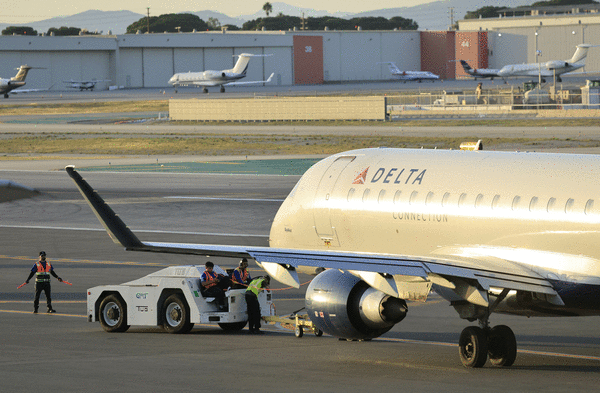
Delta Air Lines Inc. expects to incur more than $2 billion in higher fuel costs through June because of the Iran war, prompting the carrier to tread carefully and stick to its previous full-year profit forecast.
“We’re not updating it in light of the uncertainty, so I think it’d be imprudent to make any estimate at this point,” Delta Chief Executive Officer Ed Bastian said.
Fuel prices have soared as the conflict disrupts global energy markets, raising costs for airlines at a time when demand has otherwise held up. The increase is forcing carriers to weigh how much of the higher expense they can pass on through fares without dampening bookings.
Bastian said Delta is “looking to do more” fare increases beyond what has already been levied.
Airline shares globally surged Wednesday after U.S. President Donald Trump agreed to a two-week ceasefire in exchange for Tehran reopening the Strait of Hormuz, a vital route for exports of oil and other commodities.
Delta jumped more than 11% in early New York trading. Rival United Airlines Holdings Inc. rose more than 14%, while American Airlines Group Inc. rose more than 11%.
“While much uncertainty remains, Delta is clearly among the best positioned to navigate through the current environment and is acting with urgency,” Raymond James analyst Savanthi Syth wrote in a Wednesday note.
Last quarter, Atlanta-based Delta said it expected its full-year earnings per share for 2026 to be in a range of $6.50 to $7.50.
“I’m not walking it back,” Bastian said of the forecast. “But as we gain more knowledge of the impact of the duration of the fuel spike over the course of the next couple of months, we’ll be in a better position to update it.”
The airline will make “some meaningful capacity reductions” — reaching about 3.5% — from the levels planned at the start of the quarter, he said. The affected flights would likely be in less-desirable travel periods such as overnight “red-eyes” and midweek.
He also said it’s “too early” to discuss whether aircraft deliveries will be affected.
“We’re obviously going to be looking to save our capex and cash flow if this is going to be with us for an extended period of time this year,” he said.
Bastian’s comments obscured an otherwise upbeat quarterly earnings release, with premium cabin and loyalty-driven revenue cushioning the impact of higher fuel.
Delta reported adjusted earnings of 64 cents a share, topping the 57 cents expected by analysts polled by Bloomberg. The company’s adjusted operating revenue of $14.2 billion also surpassed Wall Street’s expectations of about $14.08 billion.
Bastian said that while some sensitivity may exist at low-cost airlines serving price-conscious consumers, Delta’s premium-focused strategy is providing protection against the fuel price hikes.
As the first major U.S. airline to report quarterly results, Delta is seen as a bellwether for the world’s biggest aviation market. Its lack of an updated full-year outlook highlights how volatile conditions have become for the industry.
The company said last month that bookings were strong as people locked in lower fares with oil prices heading past $100 a barrel. Bastian said then the airline saw a $400 million spike in fuel costs just in the first two weeks of March.
The airline expects pretax profit of about $1 billion for the June quarter. It also forecast second-quarter revenue to grow in a “low teens” percentage range.
Delta joined other carriers in boosting fees on baggage to help offset rising costs, charging $10 more for the first and second checked bags on domestic and select international routes, while a third bag will cost $50 more.
(Updates throughout with shares, comments from analyst and Bastian. Edits to conform.)
©2026 Bloomberg L.P. Visit bloomberg.com. Distributed by Tribune Content Agency, LLC.










Comments